Pepper Farming
- bmacharia4
- Sep 3, 2025
- 11 min read
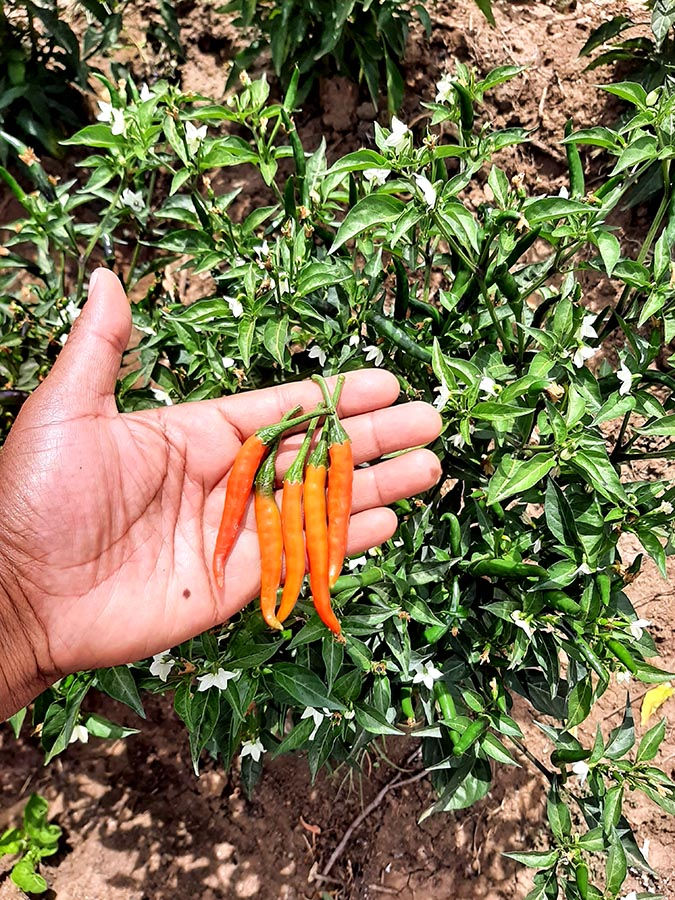
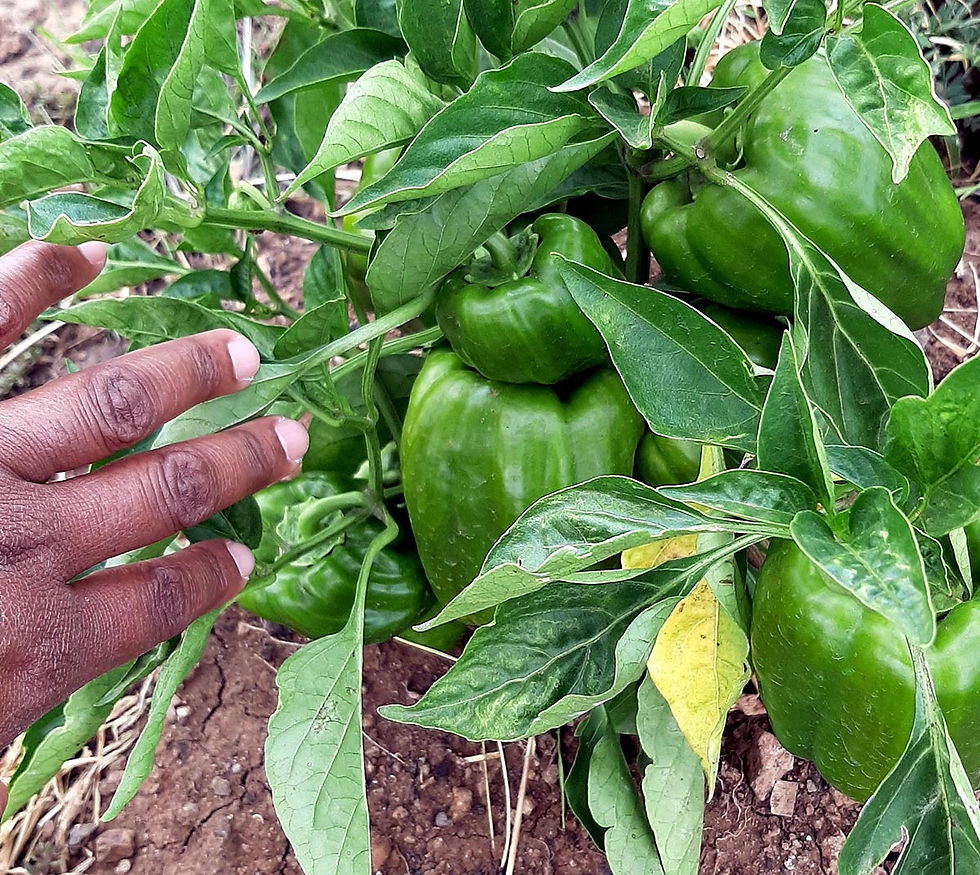
Chillies or Peppers have been used for many years as part of our culinary recipes as well as many other uses such as medicinal or in pesticides. They are mostly used as a spice to flavour food, in either their sweet, hot or hot and sweet variety. Did you know, that all types of peppers are part of the fruit variety of berries? In the course of farming or cooking, the terms chilli and peppers are sometimes used interchangeably and sometimes, you even get a special mention of chilli pepper. Most of the time, the term chillies, is used to refer to the spicy hot pepper, that has heat and packs a punch so to speak. Sweet Pepper on the other hand is mostly used to refer to the kind like the capsicums, for their flavour and spice. They all have capsaicin so the difference sometimes depends on where one comes from.
Pepper plants are perennial, meaning they grow for several years. Some people claim they have had pepper plants for more than 12 years and there are some people who even grow pepper plants as bonsai, which is fascinating, but that is a story for another day. Most of the commercial pepper plants are grown for around 3 to 5 years. Here in Kenya, peppers can be grown all year round since our climate is tropical and the conditions here are great for pepper farming. If you have had a pepper plant for over 10 years, please let me know and share some pictures.
Varieties:
There are over 600 varieties of peppers but the ones mostly used and domesticated are about 30 varieties, which range from sweet to very hot peppers. The shapes also range from round and boxy shape to little bullet-shaped ones. The hotness of the peppers is measured in the Scoville scale, which allocated the Scoville Heat Units (SHUs), depending on the amount of capsaicin in the pepper. Capsaicin is the chemical in peppers that cause them to be hot, spicy or pungent.
In Kenya, we have a variety the sweet bell peppers that we call Hoho and hot chillies that we call Pili-pili kali (though the people in the Kenyan Coastal region call the hot chillies hoho). The most common variety of hot chillies grown in Kenya for local consumption and export market include Jalapeno (pronounced: Hah-lah-PEHN-yoh), Birds Eye, Demon Chilli, Bullet, Cayenne (Pronounced: keɪ.en), Habanero, Kashmiri, among many other varieties. Each of these varieties of chillies has its preferred uses depending on the heat, colour, spiciness or sweetness. For example, the Birds eye chilli is used not only in hot sauces but also manufacture of tear gas, while the Kashmiri chillies are used to give food that beautiful red colour and flavour without the food being too spicy.
The Benefits of chillies and peppers include:
Anti-oxidants: These are substances that help to protect cells
Vitamin C: For the growth, development and repair of body tissues. Fun fact, chilli peppers have more Vitamin C than that found in citric fruits such as lemons or oranges
Vitamin B6: For normal brain development and for a healthy nervous and immune system
Vitamin K1: For blood clotting and building of bones
Vitamin A: For vision, growth, cell division, reproduction and immunity
Potassium: For heart function, muscle contraction and water balance for normal functioning of all cells
Copper: For making red blood cells and to keep your nerve cells and immune system healthy
Growing
When you decide to get into chillies or pepper farming, the first thing you do is to research the variety that you would like to plant by considering the pros and cons of the crops. You should consider your:
Climate region,
Soil type,
Availability of water for irrigation,
Availability of labour force
Market for your product.
Once you have decided on the variety you will be growing, the next thing is to buy the seeds or organise to buy the seedlings to plant. The decision to propagate seeds or buy seedlings to plant on your farm is very important. Chillies or pepper seeds are very tricky to germinate due to their hard outer shell.
Kitchen garden or balcony potted peppers
You should start by drying seeds from your favourite variety of pepper or buy the seeds from your local agro-vet shop. Once properly dried, you can germinate your seeds by soaking them first, then putting the seeds in a tray with soft soil and compost indoors, in a warm place, and then wait for 2 to 5 days for germination to occur. Water lightly so as not to damage the delicate seedlings, once the initial germination occurs, move the seedlings still in the tray to a place with some sun but protected from the elements and then wait until the seedlings are about 10 cm before moving the seedlings carefully to a good size planter or pot to allow for the space and growth of your variety pepper
Small-scale farming
I would recommend that you buy certified seeds from an agro-vet or specialists in chilli and pepper farming. The best seeds, no matter the variety that you decide to grow, are seeds that are labelled “F1 hybrid seed”. F1 Hybrid seeds mean that the seeds are first-generation seeds that have been successfully cross-pollinated to produce one genetically uniform variety of crops. F1 literally means Filian 1 or the “first children”, so F2 seeds would mean the seeds are cross-pollinated from F1 crops. The main advantage of F1 seeds are that they are disease resistant and “much easier” to grow. Some of the cons of F1 seeds is that they are expensive and there is an issue about saving the bio-diversity of indigenous seeds to save seed diversity, as well as the loss of flavour compared to heritage or traditional varieties since hybrid varieties are bred for disease control, uniformity, reliability and storage or shelf life.
Once you have selected the variety of chillies or peppers you want to grow and you have bought your F1 seeds, germinating those seeds needs expertise so that you get the highest germination and survival rate, considering how expensive those seeds are. It is recommended that you employ propagators to assist you with the germination process. Propagators are paid per well-germinated seedlings. So it is in their best interests, not only for their reputation but also to get paid, they have to germinate healthy seedlings. Propagation takes about 6 weeks for the seedlings to be strong enough to transport them to the farm and transplant shock after planting. The other benefit of getting the seeds propagated by professionals is that in the 6 weeks before you get your seedlings, you will have enough time to prepare your farm for planting.

Land preparation for the pepper seedlings varies depending on the irrigation system you plan to use. There are several irrigation systems that Kenyan farmers employ in their farms and that is determined by the financial ability, availability of water and the source of water.
Drip irrigation is used where the crops are planted in beds, in a straight line, then a pipe with little holes, runs along the side of the plants, delivering just the amount of water needed per plant. The recommended size of the pepper beds is 3m x 1m and about 20cm high. This allows for space to grow your crops and space for maintenance and harvest. Drip irrigation can be automatically or manually operated. This is the best type of irrigation since there is no water wasted as the plant gets watered directly to the roots. The downside is that drip irrigation can be expensive to install and needs some skill to operate
Furrow irrigation is one of the oldest types of irrigation. This is where the crops are either planted in a raised bed beside trenches and water is released to flow in the furrow and the crop from below at the roots.
Basin irrigation is a little similar to furrow irrigation, but instead of the crops being in a straight line with furrows alongside, in basin irrigation, the farm is divided into basins or sections and the crops are planted on the sides and corners of the basins, then water is filled in the basin to water the crops from the roots
For furrow and basin irrigation, both have low-investment costs to set up but they are labour-intensive to operate and there is a risk of the plants being damaged in the process of applying water into the furrows or basins.
You might have noticed that all the irrigation methods listed here for pepper plants, water the plants at the roots, below the foliage. This is because overhead irrigation results in diseases such as blight and other fungal diseases and it can also cause damage or dropping of flowers which will lower your production.
During land preparation, after tilling the land, there are a few more steps that are recommended to make sure that, once you transplant the seedling to the farm, they will find the best possible environment to grow and thrive. This includes:
Soil test: This is done by local labs to check your soil health. Once it is done, they will advise any nutrients that you may need to boost in your soil for the best crop production, depending on the crops you intend to plant as well as your soil PH levels
Manure: Sometimes the soil test will show that you have healthy soil but adding manure to your soil and mixing it up during land prep, will boost the nitrogen, phosphorous and other nutrients that plants need to grow and thrive.
Fertilizers: There 3 main types of fertilizers that we use in crop management schedules.
DAP fertilizer is an excellent source of Nitrogen and phosphorous which is applied to help with plant growth and development and can be used as a starter fertilizer a few weeks after transplanting when the seedlings are weak and need a boost.
CAN fertilizer is also a nitrogen-based fertilizer. It can be used before planting by mixing it in the soil, or it can be applied as a top dressing to boost plant health and fruit production.
Urea can also be used to incorporate nitrogen into the plant and boost foliar growth though it has less nitrogen than in CAN fertilizer.
Now your farm is ready, the irrigation system is on standby and the seedlings are ready to come home for transplant. Transporting seedlings to the farm should be done carefully to prevent damage to the seedlings. Planting is labour-intensive and the seedlings should be planted depending on the type of irrigation in place but the recommended spacing is 1m x 1m or 60cm x 45 cm. This allows for the plant to grow up and out for effective and maximum production. Transplanting should be done either early in the morning or later in the evening when the temperatures are low, so as to reduce transplant shock in the seedling and to ensure that they adapt well to the new environment. The soil should also be well watered before the transplant and watered again after the transplant.
Management of the pepper plants has to be exact and precise, in timing and measurements of water irrigated, fertilizers and sprays. Even though we all want to practice 100% organic farming, sometimes, especially for commercial crops, there is a need to boost production and control pests and diseases using approved chemicals and fertilizers. You should visit your local agro-vet, and consult your local agronomist or agricultural extension officer in your area for more information on these chemicals and fertilizers.
There should be a strict observation of the Pre-Harvest Intervals (PHI) to ensure that, before you harvest your produce, the chemical components in the pesticides and fungicides have broken down completely. This varies from one chemical to another but there is a minimum of 1 week between the last spray application and the harvest.
The preciseness in the application of pesticides, and fungicides, as well as regular and efficient irrigation, will help prevent flower abortions, small or deformed fruits, weak plants, root rot, and wilted leaves among other problems that will greatly affect your overall production and product quality.
Disease and pest control done on a spray schedule and irrigation done on a regular basis, either early in the morning or late in the evening will help to optimise your production for great quality and quantity of crops. There is usually a schedule of when the pesticides and fungicides should be applied as well as the right chemical to water mixture and that should be strictly observed.
Intercropping
When growing peppers, especially on the farm, you can intercrop with other plants to maximise the use of your land and also, some of the crops can help in disease and pest management. There are crops that get along with the chilli or pepper plants and others that do not.
The ones that get along are referred to as buddy crops or companion crops and they include:
Basil: It helps to repel fruit flies and some beetles that feed on the pepper fruits
Onions
Leeks
Garlic
Chives
Low-growing herbs like oregano can also be planted to act as a sort of mulch to protect your soil from water loss or evaporation
The crops that do not get along with the pepper plants or Not-buddy crops, should not be intercropped with your peppers as they will either compete for nutrients or stunt or hinder the optimum growth of the plants and fruit production. They include:
Beans
Beetroot
Peas
Fruit trees
Chillies and pepper are ready to harvest after 2.5 months in ideal conditions and crop management. The first harvest is usually low and the plants increase and improve production as they mature. The picking will continue for 3 to 4 months with short interludes in between. Kenya being a tropical climate, you can harvest all year long with just the production going up or down depending on the crop cycle. Harvesting is done once or even twice a week depending on crop health.
Harvest
Harvesting is very labour-intensive and it is a slow and careful process to pick the peppers without damaging the flowers or the plants while maintaining their structure and stalks.
Harvesting can be done when the chillies are either green or red or for the sweet pepper, whatever colour the fruits should be since there are many varieties that range from green to orange and many colours in between.
The harvest should be shipped or collected as soon as possible, so as to minimise the cost of storage and to maintain the quality of the harvest. Some buyers will prefer dried chillies and this is done under shade net or solar dehydrators. Though it drops the weight of your harvest by around 1/3rd of the weight due to dehydration, the dried chillies keep well and also fetch a very good price. The downside of drying the chillies is that it takes a while to get the chillies dried properly and it needs expertise to dry perfectly while avoiding mould
Pepper farming is a very profitable venture and there is a wide network of buyers who buy either farm-gate (when the buyer comes to collect the harvest from the farm) or where the produce is delivered to the buyer. You should start looking for a buyer as soon as you plant your seedlings so that the minute they are ready to harvest, you will have a ready buyer.
The chillies grown in Kenya are exported to various counties but our main markets abroad include the USA, Europe and Japan. The chillies exported are either fresh green, fresh red or red dried chillies. The local market also has a huge appetite for the peppers as they are not only used in our homes but also in the local spice companies to make the spices that we see in the spice isles in the shops and supermarkets.
Value addition is another way that farmers deal with surplus produce or those who want to take a different route to use their peppers. For example, the hot chillies can make chilli sauces and chilli powders and salsas also known as Kachumbari in Kenya. These can be sold to consumers, hotels, restaurants and shops or supermarkets for re-sale.
Organic farmers can make home-made pesticides using chillies as the base product as it repels a lot of pests and prevents some fungal diseases.
Sometimes chilli powder is used for medicinal purposes such as rheumatism, colds, coughs, arthritis and digestive health among other uses
To all you hot farmers out there, may you have a sweet pepper farming experience and harvest J


Comments